Running a small salon in 2026 without the right software means chasing bookings on WhatsApp, digging through notebooks for client history, and hoping the month-end numbers add up on their own. You can still get through the day, but every task takes longer than it should, and something eventually goes wrong at the worst possible moment.
Most small salon owners aren’t looking for the flashiest system on the market. They want something that books appointments without double-booking anyone, keeps client records in one place, and doesn’t require a finance degree to understand the monthly numbers. That’s it. Yet a surprising number of salons are still running on a mix of paper diaries, sticky notes, and a spreadsheet nobody trusts.
This guide walks through what actually matters when choosing software this year, why small salons have different needs than big chains, and how to pick a system that grows with you instead of against you.
Why Small Salons Need Different Software Than Big Chains
A ten-chair salon doesn’t need the same tools as a fifty-location franchise. Enterprise platforms often come loaded with modules built for multi-region reporting, franchise royalties, and layers of staff permissions that a small team will never touch. All that complexity adds cost and slows everyone down.
Small salons need something leaner: fast booking, simple client profiles, clean billing, and reports that answer real questions instead of burying them in noise. Price matters too. A solo stylist or a small team can’t justify paying for features built for a hundred-location brand.
This is exactly where all-in-one software built specifically for independent salons and small teams tends to outperform bloated enterprise tools. It handles the essentials well instead of handling everything poorly.
What to Look for in Salon Software in 2026
Smart Appointment Booking
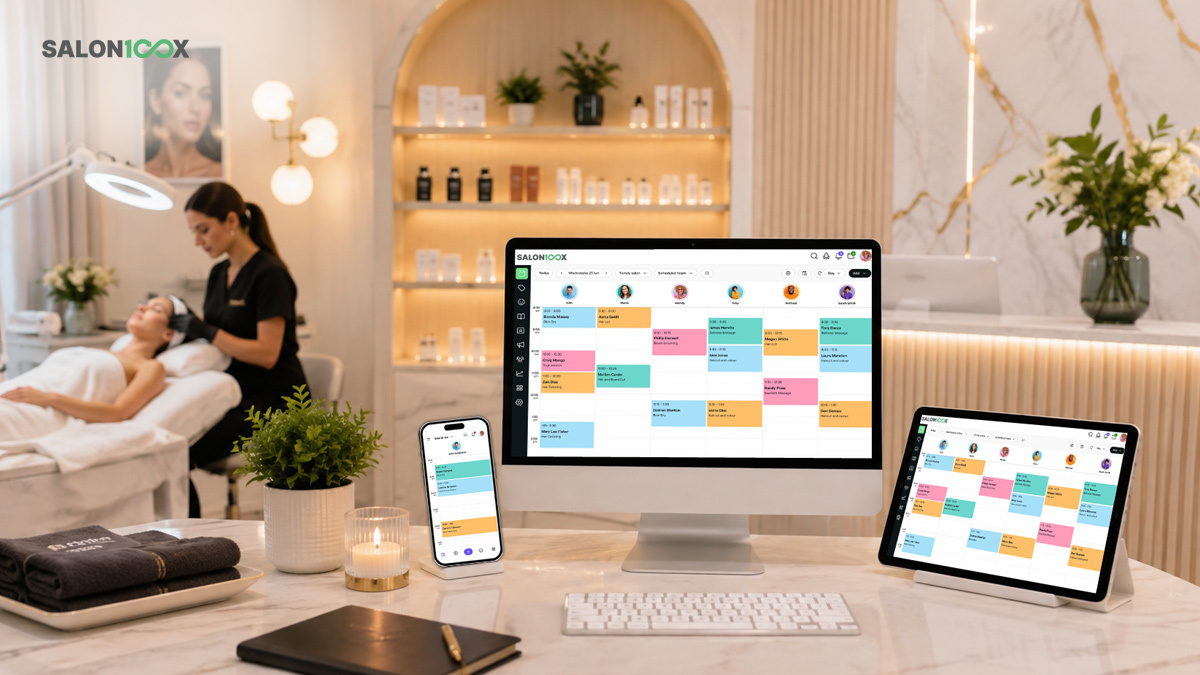
Scheduling is the heartbeat of any salon, and basic calendar views stopped cutting it years ago. Booking a color, cut, and extensions in one visit is more complex than booking a quick trim, and your software should handle that automatically, blocking the right amount of time and assigning the right staff member without any manual adjustments.
Look for automated reminders that actually cut down no-shows, real-time updates across every device, and waitlist features that text clients the moment a slot opens up. Small teams can’t afford empty chairs, and smart scheduling fills them without extra phone calls.
Client Management That Remembers Everything
A client walks in, and your software should already know her preferred stylist, the color formula from her last visit, and that she mentioned wanting a shorter cut next time. That kind of recall used to live in a stylist’s head. Now it needs to live in the system, because stylists change jobs and salons can’t afford to lose years of client history overnight.
Good client management also means proper CRM tools: birthday promotions, referral tracking, service history, and notes that follow the client rather than one employee.
Billing, Payments, and Reporting in One Place
Small salons rarely have a full-time bookkeeper, so billing needs to be simple and accurate by default. Integrated payment processing means one system to reconcile at closing time instead of juggling a separate card terminal and a separate ledger.
Reporting should answer plain questions: which stylist brings in the most retail sales, what’s the real profit margin after product costs, and whether Saturday afternoons are genuinely your busiest slot. Dashboards that need a manual to interpret aren’t worth the subscription.
Built to Scale Without Switching Systems Later
Plenty of salons start with one location and one goal in mind: staying full. But growth happens, and switching software mid-growth is painful. Look for a platform that handles a second location or a growing staff roster without forcing a total system change down the line.
Salon100x: A Strong Fit for Small Salon Teams

Salon100x was built around this exact gap between overpowered enterprise systems and basic scheduling apps that fall apart once a business starts growing. It brings booking, client management, billing, and reporting into a single dashboard, which matters most for small teams juggling five roles between three people.
A few things stand out for small salons specifically:
Unified operations. Bookings, payments, CRM, and reports all live in one system, so there’s no toggling between four different tools just to close out a day.
Automation that saves real time. The system sends reminders on its own, fills cancelled slots through smart waitlists, and keeps follow-ups running in the background so no one on your team has to chase clients manually.
Room to grow. Whether it’s one chair today or three locations next year, the platform scales without requiring a full migration to a new system.
Cloud access from anywhere. Owners can check the schedule, review reports, or approve a refund from a phone at home, which matters a lot when you’re wearing every hat in the business.
Salon owners who want a deeper look at pairing the right technology with day-to-day operations should check out this breakdown of salon software growth strategies, which covers how scheduling, inventory, and reporting work together to actually move revenue, not just organize it.
Common Mistakes Small Salons Make When Choosing Software
Picking the cheapest option often backfires. A clunky, frustrating system costs more in wasted staff time than a slightly pricier tool that just works.
Ignoring mobile access is another costly one. Clients book appointments at midnight, and stylists check their schedule from their phone before they’ve even had coffee. Software without solid mobile support isn’t really finished software.
Skipping proper onboarding is a mistake too. Salons that rush setup often end up using only a fraction of what they paid for. Skipping proper onboarding is a mistake too. Salons that rush setup often end up using only a fraction of what they paid for. Get comfortable with scheduling and client profiles first, and worry about inventory tracking or advanced reporting once the basics feel natural.
Making the Final Decision
Not every small salon needs every feature under the sun. A solo stylist doesn’t need multi-location reporting, and a booth rental space doesn’t need complex commission structures. The right salon management software is the one that solves your actual daily headaches, not the one with the longest feature list.
Constantly dealing with overbooking or no-shows? Put scheduling at the top of your list. If billing chaos is eating your evenings, start there instead. The goal isn’t collecting features. It’s running a smoother business where your team spends more time with clients and less time fighting the system meant to help them.
2026 has no shortage of software options for small salons, but the ones that actually earn their monthly fee are the ones built around how small teams really operate, not scaled-down versions of software made for chains ten times their size.