Key Takeaways
- AI-powered scheduling learns real service times and stylist patterns, cutting gaps and overbooking in salon calendars.
- Predictive no-show scoring lets salons intervene early with reminders, deposits, or confirmation calls before a client skips.
- Automated, behavior-based reminder sequences outperform generic 24-hour texts at reducing missed appointments.
- AI segments clients automatically, sending color clients color offers and lapsed clients win-back messages instead of blanket promos.
- Predictive rebooking prompts reach clients right before their usual rebooking window closes, boosting retention without manual follow-up.
- AI-driven inventory and staffing tools forecast product usage and busy periods, cutting overstock and understaffing in 2026 salons.
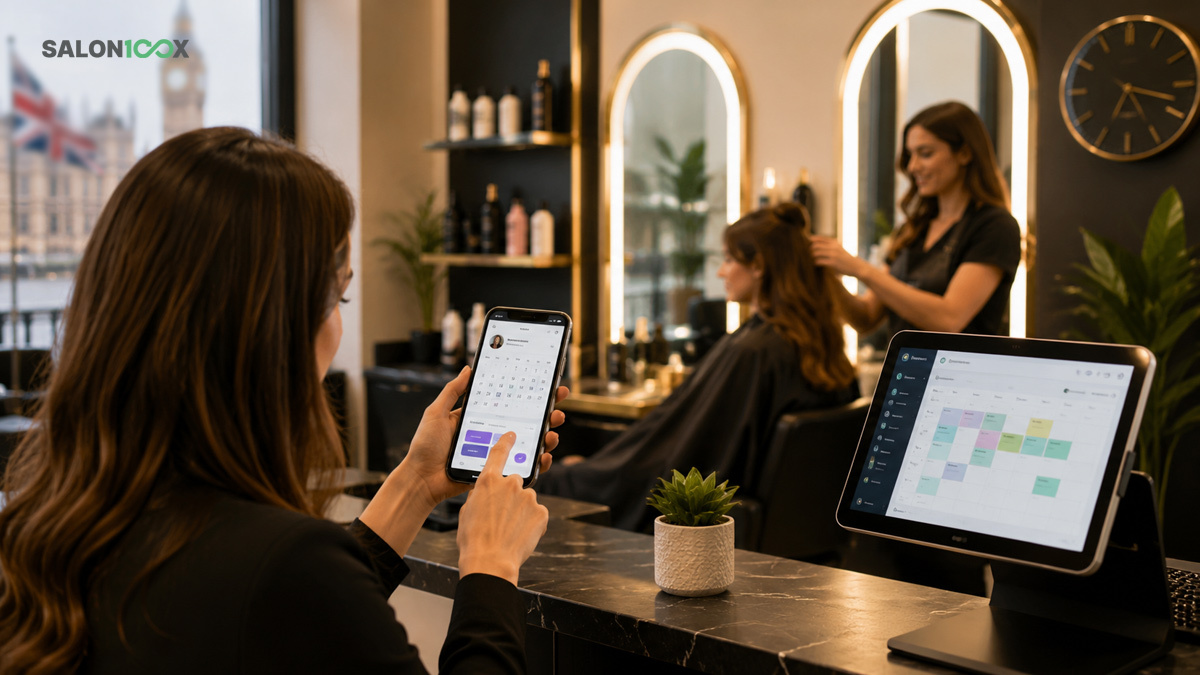
Walk into any busy salon in London, Manchester, or Birmingham today and you’ll notice something different about the front desk. The receptionist isn’t juggling three phone calls while flipping through a paper appointment book. There’s a screen quietly doing the work: confirming bookings, flagging a client who’s likely to cancel, suggesting the next available slot to someone browsing on their phone at midnight.
That’s not a glimpse of the future. That’s 2026.
AI has moved from buzzword to backbone in salon operations across the UK, and owners who adopted it early are already seeing the difference in their books, their staff schedules, and their client retention numbers. This guide breaks down exactly how artificial intelligence is reshaping salon management this year, and what it means for your business whether you run a single chair in a high street studio or a multi-location group.
Why 2026 Is the Turning Point
Salons have always run on relationships. That hasn’t changed. What has changed is the amount of behind-the-scenes work required to keep those relationships profitable. Between staffing, inventory, marketing, and client communication, most owners spend more hours managing the business than doing the craft they built it around.
AI didn’t replace the relationship side of the business. It absorbed the operational side that was eating everyone’s time. Scheduling conflicts that used to take fifteen minutes to untangle now resolve themselves. Marketing that used to mean guessing which clients to text now runs on actual behavioral data.
Owners who picked the right salon management software early in this shift are operating with a level of efficiency that used to require a full-time operations manager. The ones who haven’t adopted these tools yet are starting to feel the gap.
This is exactly the gap Salon100x was built to close. It’s an AI-powered salon management platform designed to handle scheduling, no-show prevention, client marketing, and day-to-day admin in one place, so UK salon owners can spend less time on spreadsheets and more time on clients. Rather than bolting AI onto an old system as an afterthought, Salon100x builds it into the core of how bookings, reminders, and rebooking prompts work from day one.
Smarter Scheduling That Actually Learns
Traditional booking software just holds a calendar. AI-powered scheduling does something more interesting: it learns patterns.
It notices that your color clients tend to book 45 minutes longer than the system estimates. It picks up on the fact that a particular stylist runs behind on Fridays after 3pm. It flags when a time slot is likely to sit empty based on historical demand, then nudges pricing or promotions to fill it.
This isn’t theoretical. Salons across the UK using predictive scheduling tools report tighter calendars with fewer awkward gaps between appointments. Staff aren’t sitting idle, and clients aren’t waiting past their booked time because the system finally accounts for real service duration instead of a generic estimate.
If you’re comparing tools for a smaller operation, it’s worth reading up on the salon management software for small salons in 2026, since the feature set that makes sense for a 20-chair franchise looks very different from what a boutique studio actually needs.
The No-Show Problem, Finally Solved
Ask any salon owner in the UK what keeps them up at night financially, and no-shows will come up fast. A single missed appointment doesn’t just cost that hour of revenue, often £30 to £100 depending on the service. It cascades: the stylist’s whole day shifts, other clients who wanted that slot got turned away, and the math on labour costs stops working.
AI has attacked this problem from multiple angles at once.
Predictive risk scoring is the biggest shift. Systems now analyze booking history, appointment lead time, communication responsiveness, and even weather forecasts to flag which appointments are at higher risk of a no-show. Salons can then intervene early: a confirmation call instead of a text, a deposit request, or a friendly reminder timed for maximum response.
Automated reminder sequences have also gotten far more intelligent. Instead of one generic text 24 hours out, the system times reminders based on how each client actually responds, sending a second nudge to the ones who tend to forget and skipping it for the ones who always show up on time.
Deposit and cancellation policy automation rounds this out. AI-enabled platforms can auto-charge deposits, hold cards on file, and apply cancellation fees without a single awkward phone call from staff. That alone has changed the tone of a lot of front-desk conversations. For a deeper breakdown of the tactics working right now, this piece on how to reduce salon no-shows with booking software is worth bookmarking.
Personalized Marketing Without the Guesswork
Old-school salon marketing meant blasting the same promo to every client on the list and hoping enough of them cared. AI marketing tools have made that approach look outdated fast.
Segmentation now happens automatically. A client who hasn’t booked in 90 days gets a different message than someone who was just in last week. Someone who always books color services sees offers relevant to color, not a generic haircut discount that means nothing to them.
Predictive rebooking prompts are quietly becoming one of the highest-ROI features in modern salon software. The system knows that a particular client typically rebooks every six weeks, so it reaches out right before that window closes, rather than waiting for the client to remember on their own.
Review and reputation management has folded into this too. AI tools can identify happy clients right after a great appointment and prompt them for a review at the moment they’re most likely to leave one, while quietly flagging dissatisfied clients for a follow-up before a bad review ever gets posted.
Inventory and Staffing: The Quiet Wins
Marketing and scheduling get most of the attention, but some of the biggest efficiency gains in 2026 are happening in less visible corners of the business.
AI-driven inventory tracking now predicts product usage based on service volume, so salons stop over-ordering color that expires on a shelf or scrambling for backbar stock mid-week. Staffing tools have gotten smarter too, forecasting busy periods weeks in advance so owners can schedule the right number of stylists instead of guessing based on last month’s gut feeling.
None of this is glamorous. It’s also exactly the kind of work that used to take hours of manual spreadsheet wrangling every week, and now happens in the background while owners focus on the floor.
What This Means for Client Experience
Here’s the part that matters most: none of this AI adoption is really about technology for its own sake. It’s about buying back time and reducing friction so the actual salon experience improves.
Clients notice when booking is easy, when reminders feel personal instead of robotic, and when a salon somehow always seems to reach out at the right moment. They don’t see the algorithm behind it. They just experience a business that feels organized and attentive.
That’s the real shift in 2026. AI isn’t replacing the human side of salon work. It’s clearing away the operational clutter so stylists and front-desk staff can actually focus on people instead of paperwork.
Getting Started
If your salon is still running on a booking system from five years ago, the good news is that catching up doesn’t require ripping everything out and starting over. Most modern platforms integrate with existing calendars and client databases, so the transition happens in phases rather than all at once.
Start with whichever pain point hurts the most. If no-shows are draining your revenue, tackle that first. If your marketing feels like guesswork, start segmenting your client list. The tools are mature enough now that you don’t need to be technical to run them. You just need to be willing to let the software handle what it’s actually good at, so you can get back to what you’re good at.
For UK salon owners looking to make this shift without stitching together five different tools, Salon100x brings scheduling, no-show prevention, and client marketing into a single AI-driven platform built specifically for salons, not adapted from generic booking software. It’s built to be set up in days, not months, so the switch doesn’t cost you a slow week of bookings.
What’s Actually Inside Salon100x
It’s one thing to talk about AI in the abstract. It helps to see what it looks like in an actual product UK salons are using right now.
Core Features:
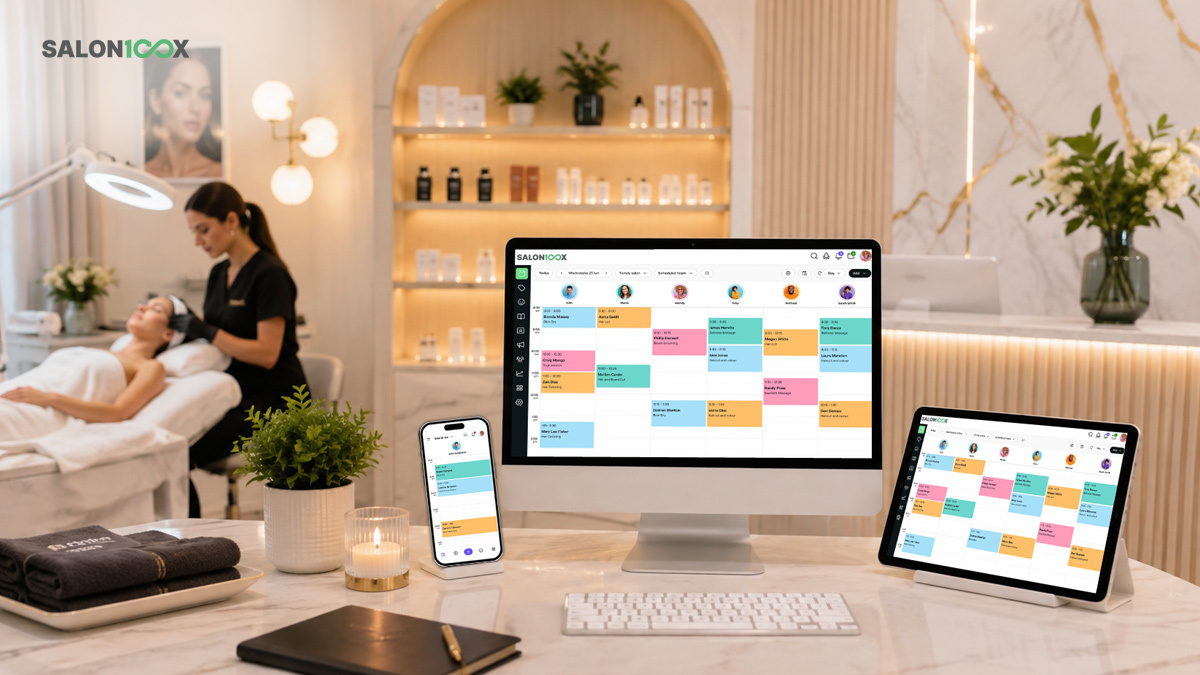
- Smart Appointment Booking – Real-time calendar, online bookings, and automated confirmations. No double bookings, no confusion.
- Client Management (CRM) – Tracks client history, preferences, and visit patterns so staff can deliver personalised experiences that keep people coming back.
- Accounting & Billing – Invoices, payments, and financial reports all in one place, always up to date, no third-party add-on needed.
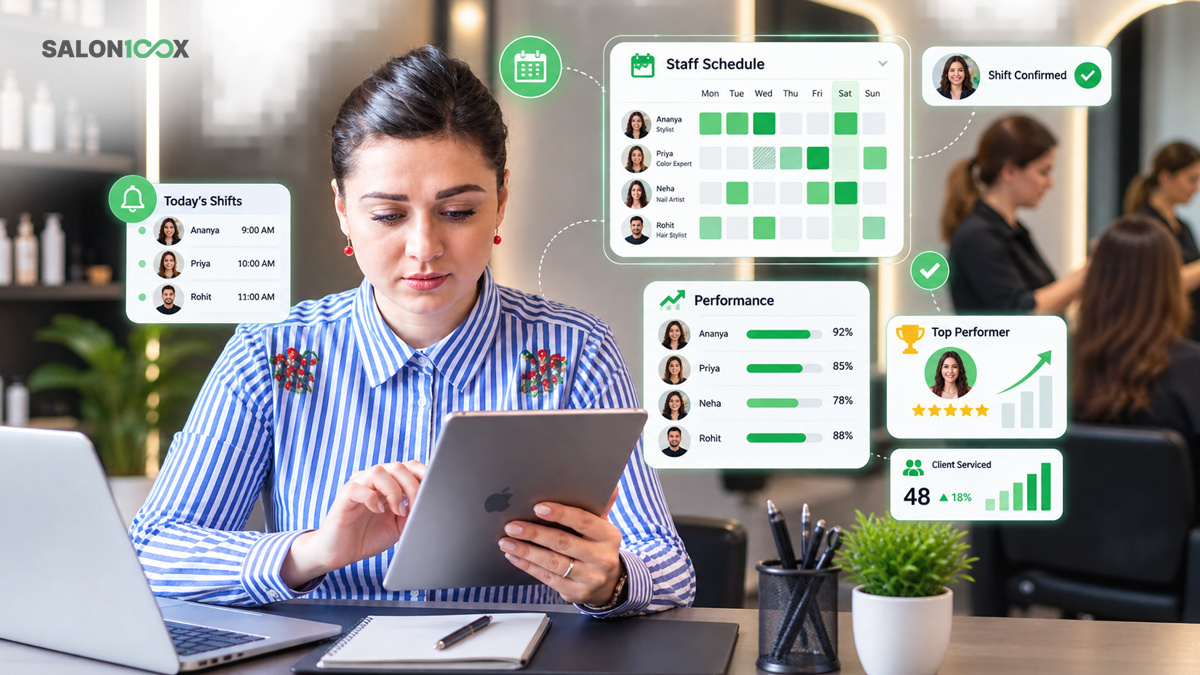
- Staff & Operations – Manage schedules, performance, and commissions without a single spreadsheet.
Core Benefits:
- Fill more appointment slots with smarter scheduling
- Reduce no-shows with automated reminders
- Increase repeat visits with client tracking
- Track revenue and expenses in real time
- Manage single or multiple locations effortlessly
And right now, Salon100x is offering the first 3 months free for salons and spas, which makes it a low-risk way to actually test whether AI-driven management delivers on everything covered in this guide before committing long term.