Key Takeaways
- No shows cost UK salons £900–£1,800 a week on average, a systems problem, not a character problem with clients.
- Automated reminders alone can cut no shows by a third or more, simply by jogging clients’ memory 24–48 hours out and again on the day.
- Deposits change client behaviour instantly a 20–30% deposit on bookings over ~£40 filters out serial no shows without deterring genuine clients.
- Friction kills rebookings one-tap rescheduling turns would-be no shows into rebooked appointments instead of silent losses.
- Waitlist automation recovers lost slots in minutes, texting the next available client the moment a cancellation comes in.
- Policy has to back the software a clear 24-hour cancellation window and consistent deposit rules, stated upfront, make the whole system stick.
A client books a 6pm balayage slot on a Thursday, then simply doesn’t turn up. No call, no text, no explanation. You’ve held the chair, prepped the colour, and turned away someone else who actually wanted that time. Multiply that across a busy week and you’re not looking at a minor inconvenience. You’re looking at a real dent in revenue.
Industry estimates put no show and late cancellation rates for UK salons somewhere between 10% and 20% of all bookings. For a mid sized salon taking 200 appointments a week, that’s potentially 20 to 40 empty chairs that could have been filled. At an average service price of £45, that’s £900 to £1,800 walking out the door every single week, before you even factor in wasted product and stylist downtime.
The good news: most no shows aren’t personal. They’re procedural. Clients forget, get distracted, or simply don’t feel enough friction to bother cancelling properly. Fix the process, and you fix most of the problem.
Why No Shows Happen More Than Salon Owners Realise
Before jumping to solutions, it helps to understand where the leaks actually are.
Booking is too easy to forget. A phone call booking made three weeks ago has no digital trace in the client’s life. Nothing pops up on their phone, nothing lands in their inbox. Out of sight, out of mind.
There’s no real cost to skipping. If nothing is taken upfront and no policy is enforced, cancelling (or simply not showing up) costs the client nothing. People respond to incentives, and right now the incentive structure favours the no show.
Rebooking is a hassle. Ironically, some clients skip appointments they’d have kept if it were easier to reschedule. A phone call during salon hours, waiting on hold, playing phone tag: many people would rather just not show than deal with all that.
Communication only goes one way. Paper diaries and basic calendar apps don’t talk back to the client. There’s no automatic nudge 24 hours before, no easy tap to confirm.
Each of these is fixable with the right system in place, which is exactly where smart appointment booking software earns its keep.
What “Smart” Booking Software Actually Does Differently
Not all booking tools are created equal. A basic online calendar lets clients pick a slot. That’s it. A genuinely smart system is built to close the gaps that cause no shows in the first place.
Automated Reminders That Actually Land
The single biggest lever against no shows is timely, automated reminders, typically sent 48 hours out and then again a few hours before the appointment, via SMS and email. Salons that switch on automated reminders commonly report no show rates dropping by a third or more, simply because clients are jogged back into remembering.
Deposit and Prepayment Collection
Requiring a small deposit at the time of booking changes client behaviour instantly. When money is already on the line, people think twice before skipping. Smart booking platforms let you set deposit rules per service: a higher deposit for a lengthy colour correction, a smaller one (or none at all) for a quick fringe trim.
One Tap Rescheduling
Instead of a client having to call during opening hours, a good system lets them reschedule straight from the reminder text. Remove the friction, and cancellations turn into rebookings rather than silent no shows.
Waitlist Automation
When a cancellation does happen, smart systems can automatically text your waitlist and fill the gap within minutes, turning a lost slot into a saved one.
No Show Tracking and Client Flagging
Over time, the system quietly builds a picture of which clients are reliable and which aren’t. Repeat offenders can be flagged for mandatory deposits going forward, while your loyal regulars keep the flexible, no deposit experience.
This is the kind of layered approach you’ll find in an all-in-one software built specifically for salons, where reminders, deposits, rescheduling, and waitlists all work together rather than sitting as separate bolt on tools.
Building a No Show Reduction Policy Around Your Software
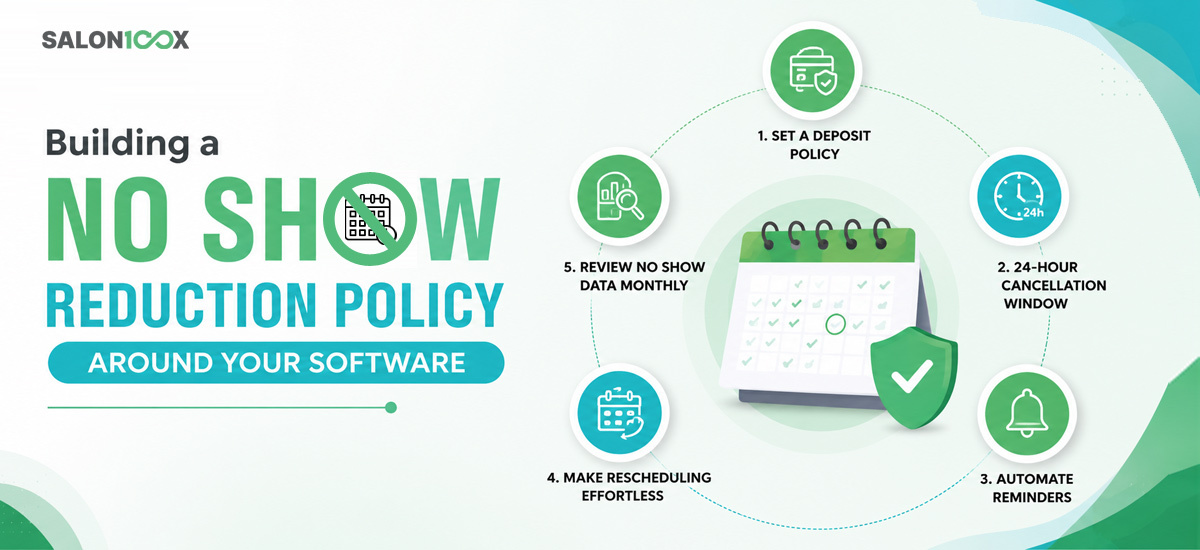
Software alone won’t fix the problem if it isn’t backed by clear policy. Here’s a practical framework UK salon owners can put in place this month:
- Set a deposit policy and stick to it. A flat 20% to 30% deposit on bookings over a certain value (say, £40 and up) is common practice and rarely puts off genuine clients.
- Give a 24 hour cancellation window. Communicate clearly that cancellations inside 24 hours forfeit the deposit. Put this on your booking confirmation, not buried in terms and conditions nobody reads.
- Automate the reminder cadence. Two reminders, one a day or two out and one a few hours before, catch different types of forgetfulness.
- Make rescheduling effortless. If cancelling is as easy as tapping a link, more clients will reschedule instead of ghosting.
- Review your no show data monthly. Most booking platforms will show you exactly which days, times, or services see the highest no show rates, so you can adjust staffing or policy accordingly.
None of this needs to feel punitive to clients. Framed well, “we hold your appointment with a small deposit so we can guarantee your slot” reads as professionalism, not distrust.
What This Looks Like in Practice
It’s one thing to talk about deposits and reminders in theory. It’s another to see the actual numbers from a salon that made the switch. A recent salon software case study walks through exactly this: a salon that restructured its booking flow around automated reminders and deposit collection, and the measurable drop in empty chairs that followed.
Choosing the Right System for a Smaller Salon
Not every salon needs an enterprise grade platform with a hundred features they’ll never touch. For independent salons and small teams, the priority list looks different: straightforward setup, a client friendly booking link, reliable SMS reminders, and pricing that doesn’t eat into thin margins.
If you’re weighing up options, it’s worth reading through this breakdown of the best salon management software for small salons in 2026, which compares tools specifically on the features that matter for smaller teams, not just the big multi location chains.
The Bottom Line
No shows aren’t a character problem with your clients. They’re a systems problem with your booking process. Reminders that actually reach people, a fair deposit policy, effortless rescheduling, and a waitlist that fills gaps automatically will do more to protect your revenue than any amount of chasing clients on the phone.
Salons that make this switch typically see the change within the first month: fuller diaries, fewer awkward “you didn’t show up last time” conversations, and stylists who aren’t standing around waiting on empty chairs. Given how thin margins already are in this industry, it’s one of the highest leverage changes a salon owner can make.