Key Takeaways
- No show rates drop significantly once automated reminders and deposit collection are switched on.
- Reporting that breaks down profit by service reveals which treatments actually make money.
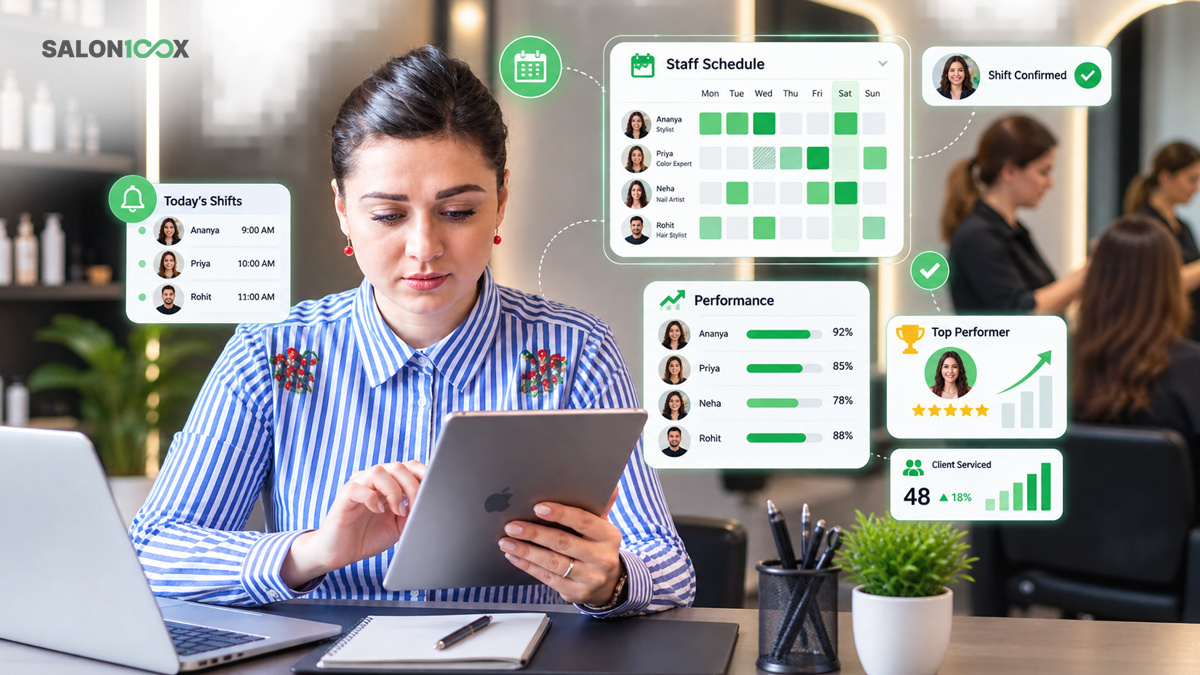
- Staff scheduling software removes hours of manual admin every single week.
- Medspas need compliance features far beyond what a standard salon package offers.
- AI powered tools are starting to predict busy periods and personalise client outreach automatically.
- The right software fits the business size and structure, not the other way around.
Walk into any busy salon on a Saturday morning and the same scene plays out everywhere. Phones ringing nonstop, a queue building at the front desk, a stylist trying to check stock between clients, and somewhere a paper diary that has managed to book two people into the same slot again. For years this was simply accepted as part of running a salon. That is no longer the case in 2026.
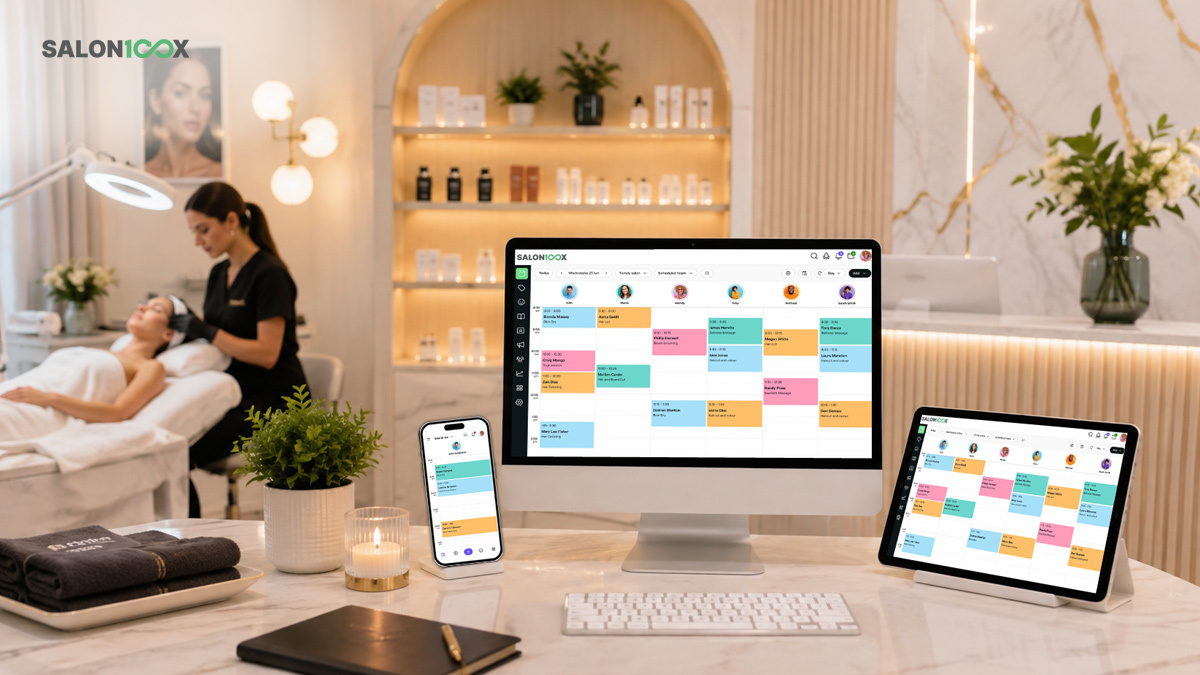
Salon Management Software UK has quietly rewritten how beauty businesses operate day to day. Tasks that once needed a team of three now run from a single screen sitting next to the till. Owners across London, Manchester, Leeds, and smaller towns across the country are discovering that software they once treated as a nice extra has become the actual backbone of the business.
Why 2026 Is the Turning Point
The UK beauty industry has been under real pressure lately. Rising rents, ongoing staff shortages, and clients expecting a polished experience on budgets that have not grown much since 2022. Salons that made it through the last few years mostly did so by cutting waste rather than cutting quality, and this is exactly where management software earns its place.
Booking systems that used to live only in a paper diary now sync directly with online calendars, payment processors, and marketing tools. A client can book a colour appointment at midnight, get a reminder the morning of, pay a deposit automatically, and receive a message two weeks later suggesting it is time for a touch up. None of that requires a human once the system is properly set up.
The Real Problems It Solves
Ask any salon owner what frustrates them most and the answers are almost always the same three things: no shows, scheduling headaches, and not knowing which services actually turn a profit.
No shows used to be treated as an unavoidable cost of doing business. A client fails to show up and the slot, along with the revenue that would have paid for staff time and product, simply disappears. Deposit collection and automated reminders fix this directly, and many salons report no show rates dropping by half within a few months of switching systems.
Scheduling is another quiet drain on time. Working out who is available, who has the right skill for a treatment, and how to balance chair time fairly used to eat hours out of a manager’s week. Software now handles this in minutes, factoring in holiday requests, skill levels, and even how busy a particular day tends to be based on past patterns.
Then there is profitability. Most salons genuinely do not know which services make the most money once product cost and staff time are properly accounted for. Detailed reporting inside modern platforms breaks this down service by service, often revealing that a treatment assumed to be a big earner is actually barely breaking even.
AI Is Changing the Game Faster Than Expected

The biggest shift happening right now is the arrival of genuinely useful AI in Salon Management. This is not the vague AI hype seen elsewhere. It is showing up in practical, specific ways, predicting which time slots are likely to go unbooked so staff can be offered flexible shifts, spotting clients who are due a rebooking based on their personal treatment history, and even suggesting product upsells based on what similar clients have purchased before.
Owners who adopted these AI driven features early are reporting fuller diaries during traditionally slow periods and marketing that feels personal rather than generic, without needing to hire anyone new to manage it.
Medspas Are Leading the Adoption Curve
One sector moving faster than almost any other is medical aesthetics. Medspas blend the retail feel of a salon with the compliance demands of a clinic, and that combination creates needs a standard booking system simply was not built for. Consent forms, treatment history, product batch tracking, and insurance documentation all need to sit comfortably alongside regular booking and payment functions.
This is exactly why owners searching for Salon Management Software for Medspas UK usually end up needing something more specialised than a generic salon package. A medspa running Botox, fillers, or laser treatments cannot risk a system that treats every appointment identically to a haircut booking. The regulatory weight alone, storing medical history securely and tracking which practitioner performed which procedure, pushes medspas toward platforms designed with those requirements from the start.
What Owners Actually Want From These Platforms
Ask ten owners what matters most and the same themes keep coming up. Ease of use sits near the top of almost every list, since a stylist between clients has no patience for a clunky interface. Reliable support matters just as much, particularly when something breaks on a fully booked Saturday morning. Pricing that scales sensibly also comes up constantly, since a single chair studio has very different needs than a five location chain.
Choosing the Right Platform
With so many options available, the decision usually comes down to trust and genuine fit rather than a long feature checklist. This is part of the thinking behind pages like Why Choose Salon100x, which focuses on the practical realities UK salons face daily, VAT handling, GDPR compliant client records, and support hours that actually align with British working patterns.
Owners evaluating platforms should ask specific questions rather than get swept up by marketing. Does it integrate with the payment processor already in use? Can staff access it easily from their own phones? How steep is the learning curve for someone completely new to booking software? These practical questions matter far more than an impressively long feature list that will mostly go unused.
Where This Is Heading
The next stage of this shift is already visible. Predictive booking that suggests optimal time slots, automated stock reordering that triggers before a product actually runs out, and marketing tools that send personalised offers based on real purchase history rather than blanket discounts sent to everyone.
Platforms like Salon100x sit right at the centre of this movement, giving salons and medspas one connected system for bookings, payments, staff, and client relationships instead of five separate tools duct taped together.