Key Takeaways
- Manual scheduling breaks down once a salon crosses six or seven staff members or opens a second branch.
- Performance tracking should combine attendance, revenue per stylist, and client retention, not just punctuality.
- Automated commission calculation removes the errors and disputes that come with manual month end payroll.
- Medspas need scheduling software that also handles consent forms and multi session treatment packages.
- A public booking page connected to the internal staff schedule prevents double bookings and last minute call ins.
- Staff logins for checking schedules and earnings cut down the number of questions the front desk handles daily.
Salon owners can simplify staff scheduling and performance tracking by moving away from spreadsheets and paper registers and switching to a single system that handles shifts, attendance, commissions, and client bookings together. When scheduling and performance data live in one place, owners spend less time on admin and more time on the floor, and staff get clearer visibility into their own hours, targets, and earnings.
That is the short answer. The longer answer involves understanding why manual scheduling breaks down as a salon grows, what performance tracking actually should measure, and how the right software ties all of it together without adding extra work for the front desk team.
Why Manual Scheduling Stops Working
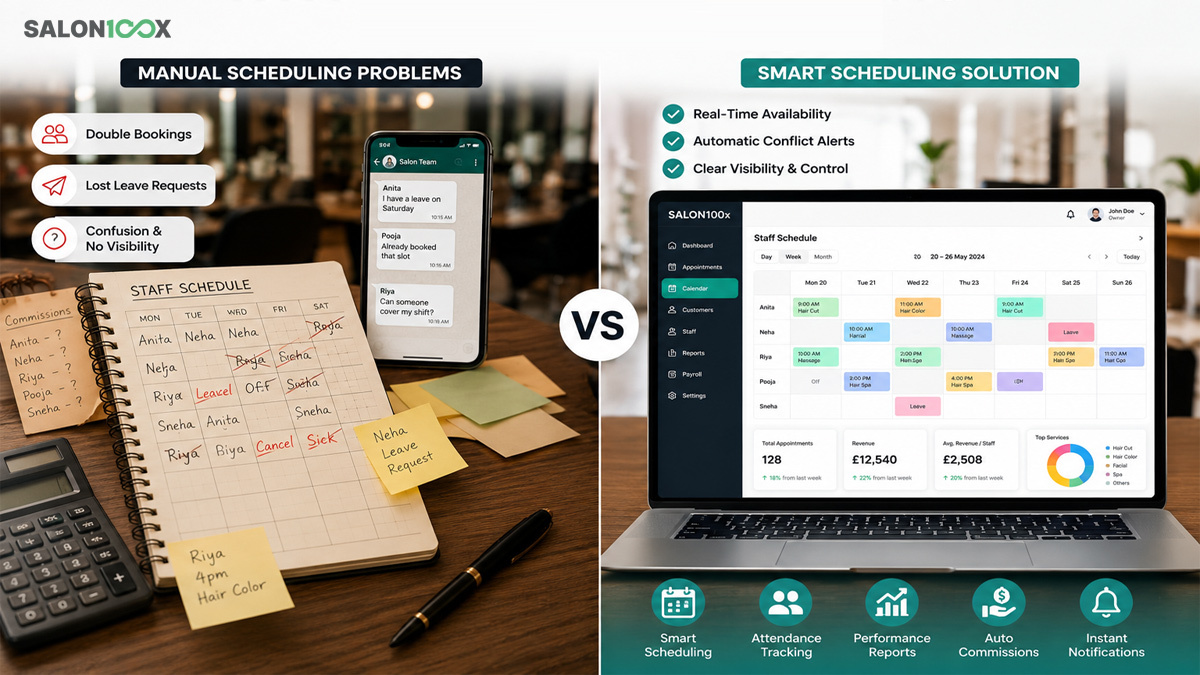
Most salons start with a diary, a WhatsApp group, and a notebook for tips or commissions. This works fine with three or four staff members. Once a salon crosses six or seven employees, or opens a second branch, the cracks start showing.
Double bookings creep in. A stylist gets assigned two clients at the same slot because the receptionist did not see an update from another shift. Leave requests get lost in chat threads. Owners end up calculating commissions manually at month end, often from memory or scattered notes, which leads to disputes and mistrust among staff.
There is also the problem of visibility. An owner running two locations cannot be physically present at both, so they rely on staff to report attendance and sales honestly. Without a system, there is no way to verify this in real time.
What Performance Tracking Should Actually Measure
Performance tracking in a salon is not just about who showed up on time. A useful system should capture a few things together.
Attendance and punctuality matter, but so does service quality measured through repeat client bookings. A stylist who brings clients back month after month is more valuable than one who books more first time appointments but loses them after one visit. Revenue per stylist, average bill value, and product upsell numbers also tell an owner where training is needed and where incentives are working.
Client feedback, even informal notes taken after a service, adds another layer. Combining this with attendance and sales data gives an honest picture of who is actually driving the business forward, rather than who is simply present the most hours.
Bringing Scheduling and Performance Into One System
This is where dedicated software changes the day to day running of a salon. Instead of switching between a booking diary, a payroll sheet, and a chat group, everything sits under one dashboard.
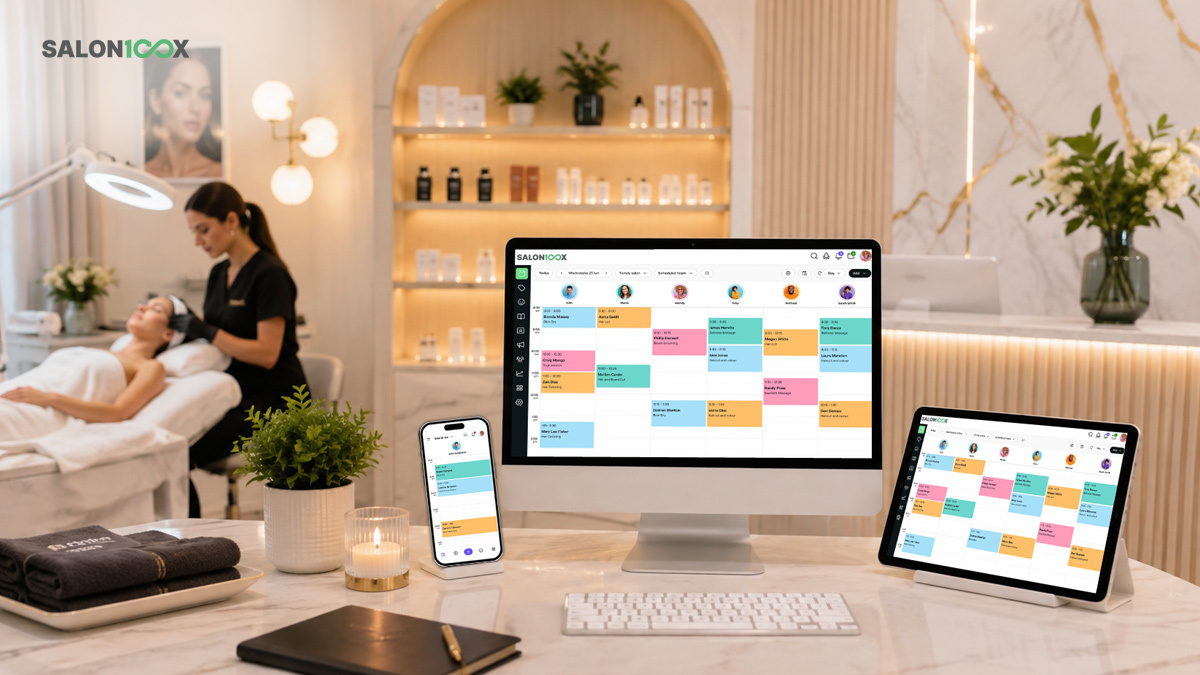
A good example of this shift is what platforms like Salon Management Software UK offer today. These systems let owners build weekly rosters in minutes, assign staff to specific chairs or rooms, and automatically flag conflicts before they happen. When a client books online, the system checks staff availability in real time, so nobody gets double booked and no receptionist has to manually cross check a diary.
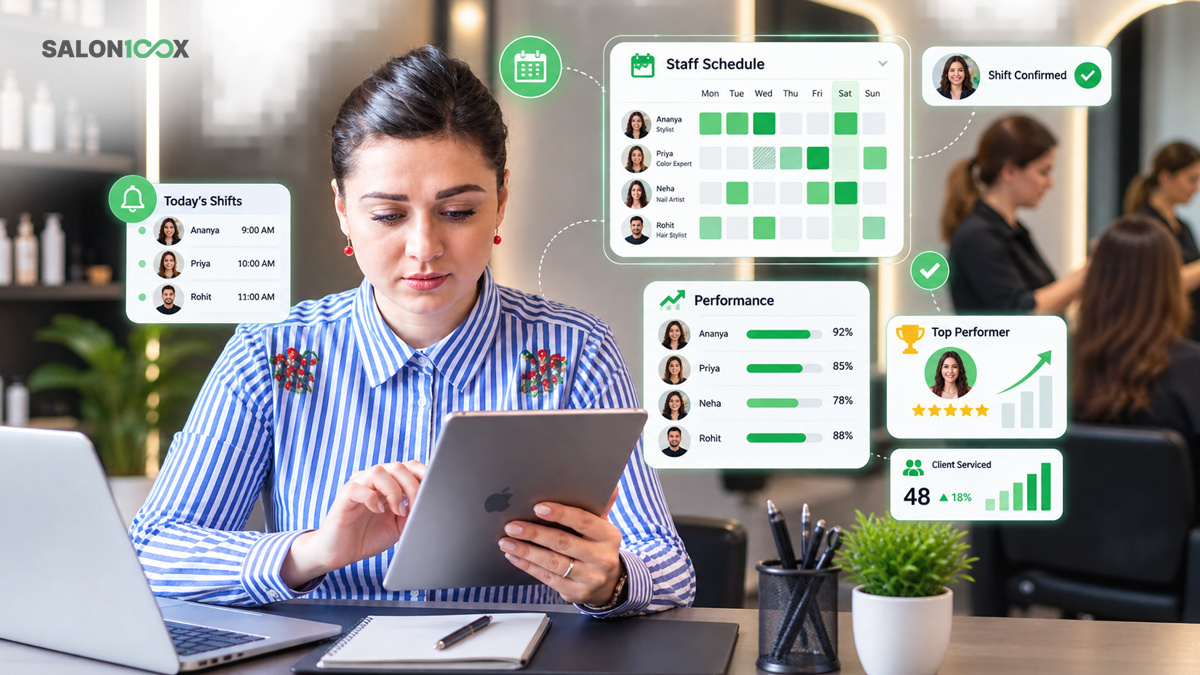
On the performance side, the same dashboard pulls attendance logs, service records, and sales figures into one view. An owner can open a report and see, at a glance, which stylist generated the most revenue that week, who has the highest client retention, and who might need extra support or training. This removes the guesswork that usually comes with month end payroll calculations.
Payroll and Commission Without the Manual Math
One of the biggest time sinks for salon owners is calculating commissions. Every stylist might have a different commission structure depending on service type, seniority, or product sales. Doing this by hand for a team of ten or more staff members, across a full month, invites errors.
Modern salon software automates this. Once a service is billed to a client, the commission calculation happens instantly based on rules the owner sets up once. At month end, payroll is close to ready, with hours worked, leaves taken, and commissions earned already compiled. Owners still review the numbers, but they are not building the report from scratch every time.
Scheduling Across Multiple Locations
Salons with more than one branch face a specific challenge. A staff member might occasionally work at a second location, or an owner might want to compare performance across branches to decide where to invest more in marketing or hiring.
This is particularly relevant for medspas and hybrid wellness salons, which often run more complex service menus alongside traditional hair and beauty work. A Salon Management Software for Medspas needs to handle consent forms, treatment history, and recurring appointment packages on top of standard scheduling, since medspa clients often return for multi session treatments rather than one off visits. Having this built into the same platform that handles staff rosters means an owner is not juggling three separate tools to run one location.
The Client Booking Connection
Staff scheduling and client bookings are two sides of the same coin. If a client cannot see accurate availability, they either call the salon repeatedly or book elsewhere. This is why scheduling software works best when tied directly to a public facing booking page.
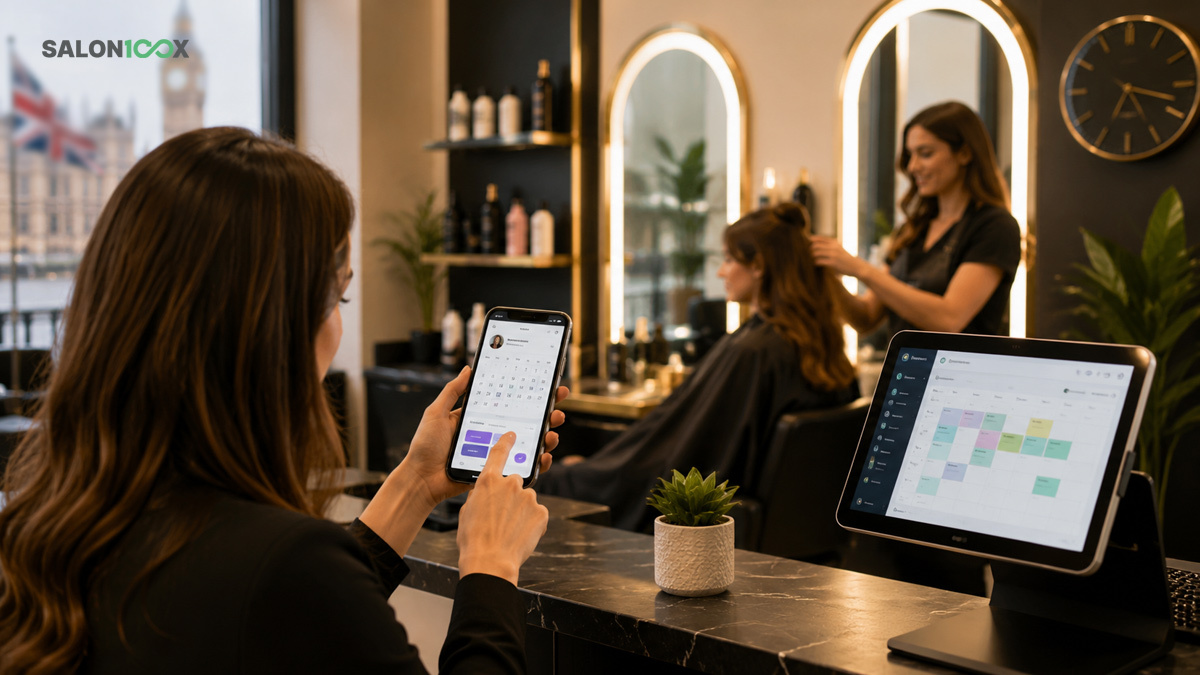
When someone searches for options and finds a reliable salon booking software setup, they expect to pick a service, choose a preferred stylist, and see real slots without a phone call. Behind that simple client experience sits the same staff schedule the owner manages internally. One update, whether it is a stylist calling in sick or a chair being blocked for maintenance, reflects instantly on both sides.
What Owners Should Look For
Before choosing a system, a few questions are worth asking. Does the software show conflicts before they happen, rather than after a client complains? Can it calculate commissions automatically based on the salon’s actual pay structure, not a generic template? Does it work across multiple branches if the salon plans to expand? And does it give staff their own login to check their schedule and earnings, reducing the number of questions the front desk has to field every day?
Platforms such as Salon100X are built around these exact questions, combining rostering, attendance, commission calculation, and client booking into one dashboard rather than several disconnected tools.
How Salon100X Puts This Into Practice
Salon100x brings booking, staff management, and accounting together in one platform, so an owner is not switching between a diary, a payroll sheet, and a chat group to run the salon day to day.
On the scheduling side, the system runs on a real-time calendar with online booking built in, so appointments, staff assignments, and availability update instantly and double bookings get caught before they happen. Automated reminders sent by SMS, email, or WhatsApp cut down on no-shows, and if a slot opens up last minute, the system can help fill it without the front desk chasing clients manually.
For staff and performance, owners get scheduling, role assignment, and performance tracking under one roof, along with commission calculation that removes the manual month-end math. A client management module sits alongside this, keeping visit history, preferences, and notes so staff can deliver a more personal experience and owners can track retention rather than just attendance. Billing, POS, and financial reporting run through the same dashboard, giving real-time visibility into revenue and expenses without a separate accounting tool.
For salons running more than one branch, or medspas managing consent forms and multi-session packages, Salon100x centralizes everything, including multi-location management and inventory tracking, into a single dashboard with full visibility across locations. Staff and owners can access it from desktop, tablet, or mobile, and role-based access control keeps sensitive data limited to the right people.
Right now, Salon100x is offering the full Diamond plan, which includes every feature mentioned above, free for the first 3 months, with no credit card required and no contract to sign. Owners can cancel anytime, and onboarding is guided so a salon can be up and running within minutes rather than days.
A Simpler Way Forward
Salon owners rarely started their business because they enjoyed spreadsheets and payroll math. Scheduling conflicts, unclear performance data, and manual commission calculations eat into time that should go toward clients and growth. Bringing all of this into one connected system does not eliminate the owner’s oversight, but it removes the repetitive manual work that causes most of the friction.
The salons that scale smoothly, whether they run one chair or five branches, tend to be the ones that stopped treating scheduling and performance tracking as separate problems and started managing them as one.