Key Takeaways
- AI search tools now answer client queries directly, often skipping traditional search results entirely
- AEO and GEO reward structured, consistent, and regularly updated information over keyword density
- Clients search AI tools with specific, conversational questions, not generic keywords
- A working, visible booking system is now part of your search visibility, not a separate feature
- Independent salons can outrank chains in AI answers if their information is detailed and accurate
- Centralised systems for scheduling and client data keep your online presence trustworthy to both clients and AI engines
Type “best balayage salon near me” into ChatGPT or Google’s AI Overview today, and you won’t get ten blue links. You’ll get a direct answer: a named salon, a reason why, sometimes a booking link. No scrolling, no comparing five tabs. One recommendation, delivered with confidence.
That shift is already reshaping how UK salons get discovered. For years, ranking meant chasing keywords and backlinks so a listing showed up on page one. Now, AI search tools like Google’s AI Overviews, ChatGPT, Perplexity, and Bing Copilot are answering client questions directly, often without the user clicking through to a website at all. If your salon isn’t structured in a way these engines understand, you’re invisible, even if your Google ranking looks fine.
This isn’t a future problem. It’s happening in searches right now, and salons that adapt early are the ones showing up in the answers.
Why Traditional SEO Isn’t Enough Anymore
Classic SEO was built for a world of ten blue links. You optimised a page, built links, and waited for Google to rank you. AI search engines work differently. They pull information from multiple sources, check it against each other, and synthesise a single answer. This is often called Answer Engine Optimisation (AEO) and Generative Engine Optimisation (GEO), and it rewards a different kind of visibility.
AI models favour sources that are:
- Structured clearly, with proper headings, FAQs, and schema markup that machines can parse
- Consistent across the web, matching business details on your website, Google Business Profile, and directories
- Backed by real data, including reviews, booking volume, and operational information, not just marketing copy
- Updated regularly, since stale pages get skipped in favour of fresher, more reliable ones
A salon with a beautiful Instagram page but a thin, unstructured website can lose a client to a competitor whose site simply answers questions better. This is exactly why more salon owners are researching AI in Salon Management, not just to run the business smarter, but to make sure the business itself is legible to the tools now deciding who gets found.
How Clients Are Actually Searching Now
The old search was simple: type a keyword, browse results, pick one. The new pattern looks more like a conversation. Clients ask AI tools things like “which salon in Manchester does the best keratin treatment for curly hair” or “find me a salon near Leeds open on Sunday with online booking.” These are longer, more specific, and more intent driven than a typical Google query.
That matters for two reasons. First, AI engines reward specificity. A page answering “keratin treatment for curly hair Manchester” beats a generic “hair salon Manchester” page every time. Second, clients expect the answer to include next steps. If the AI mentions your salon but there’s no easy way to book, the client moves to the next name on the list.
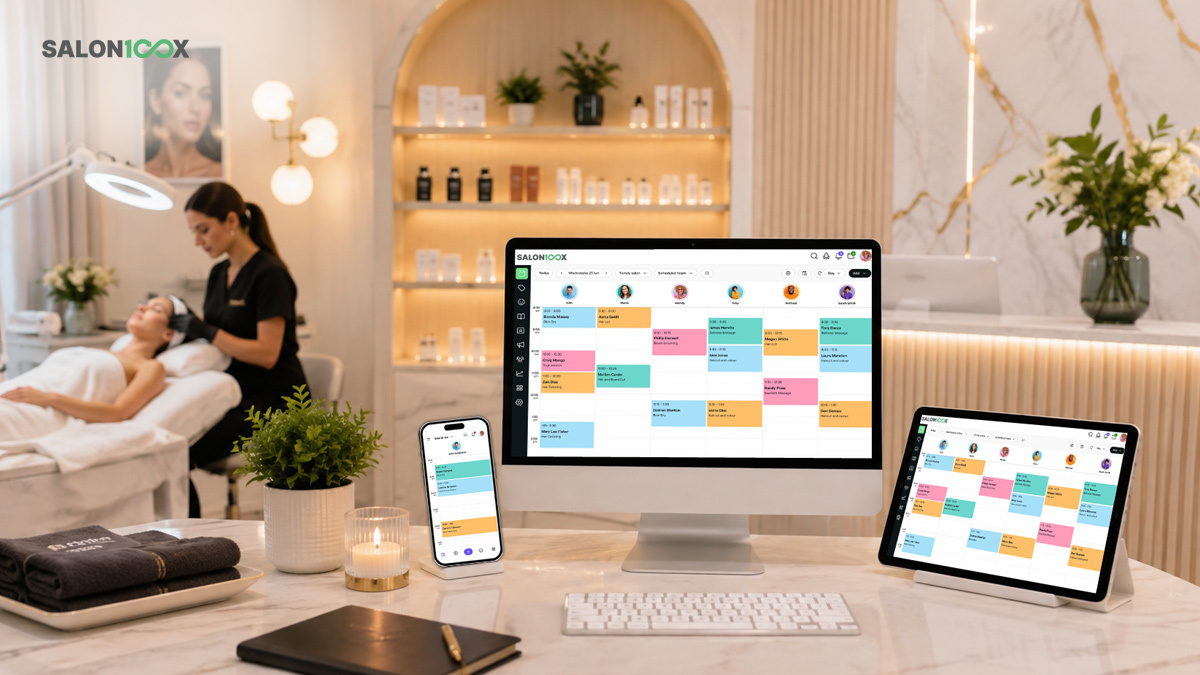
This is where operational readiness becomes part of your search strategy, not separate from it. A modern Salon appointment booking system that’s linked clearly from your site gives both the client and the AI a confirmed action to point to: availability, pricing, and a booking link, all in one place.
Core Benefits of Optimising for AI Search
Salons that get ahead of this shift see advantages beyond a ranking bump:
- Higher intent traffic, since clients arriving via AI answers have usually already decided and are closer to booking than someone still browsing
- Reduced dependency on paid ads, as strong AEO and GEO signals reduce reliance on Google Ads spend for visibility
- Better local discovery, because AI tools heavily weight location, hours, and service specificity, which favours well documented independent salons over generic chains
- Longer content lifespan, since well structured, data backed pages get reused by AI engines repeatedly, unlike a single social post that disappears in a day
- Trust by association, since a salon cited alongside real reviews and consistent business data is treated as vetted, not advertised
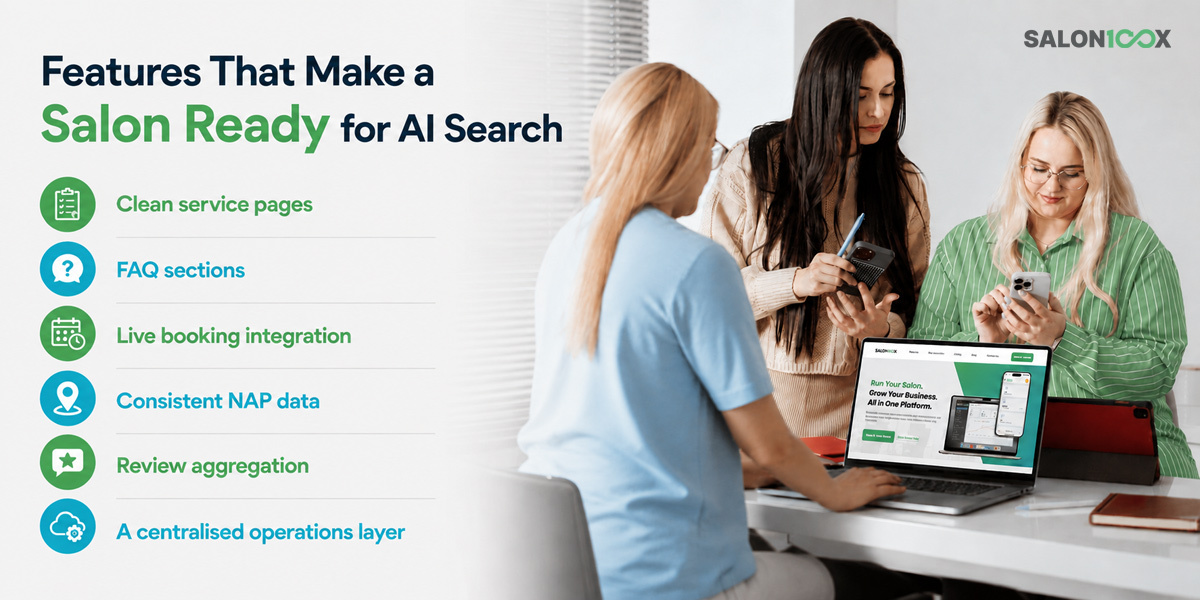
Features That Make a Salon Ready for AI Search
Getting cited by AI tools isn’t about tricking an algorithm. It’s about giving accurate, structured information that machines and humans can both use.
- Clean service pages with clear pricing, duration, and stylist specialities, not buried in a PDF menu
- FAQ sections answering the exact questions clients ask, in plain language
- Live booking integration so availability is real time, not “call to check”
- Consistent NAP data (name, address, phone) across your site, Google Business Profile, and directories
- Review aggregation that surfaces recent, specific client feedback rather than generic star ratings
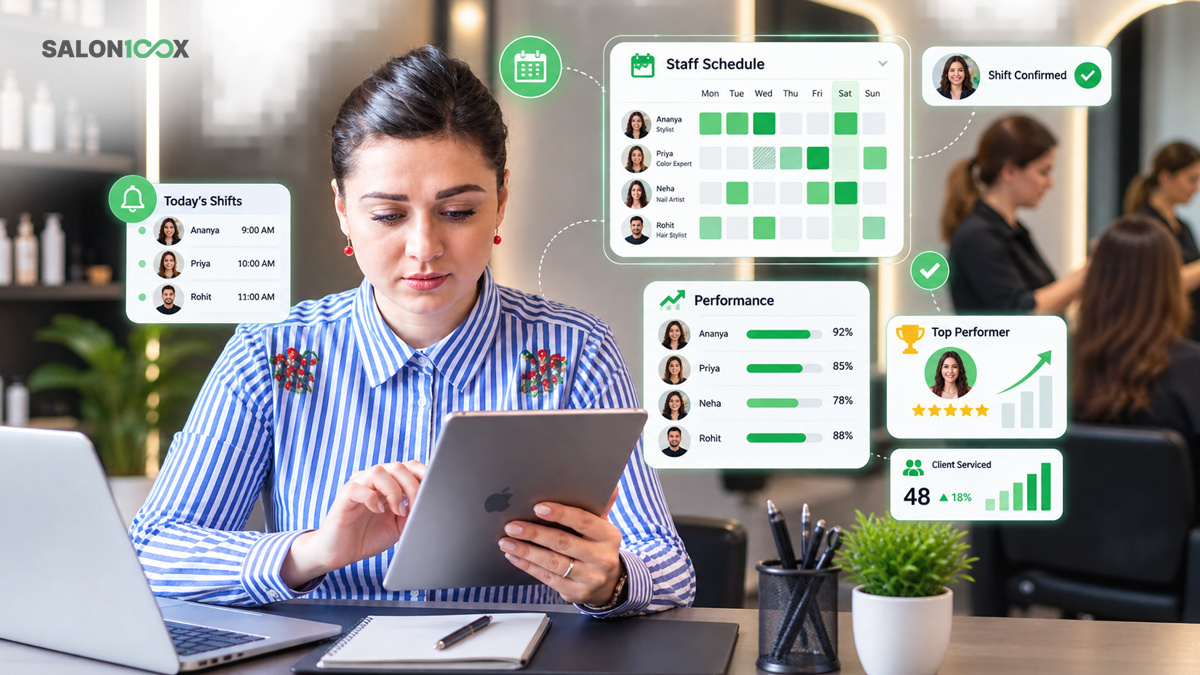
- A centralised operations layer, which is where a proper Salon Management System earns its keep, keeping schedules, client records, and service data synced so what AI tools find online actually matches what’s happening in the salon
Salons trying to patch this together with spreadsheets and a static website tend to fall behind. Platforms like Salon100x were built around this exact gap, combining booking, client data, and marketing visibility so the salon’s digital footprint stays accurate as it grows.
What This Means for Independent Salons vs Chains
Here’s the part that should encourage smaller salons: AI search doesn’t automatically favour big brands. It favours specificity and evidence. A single location salon with detailed service pages, real reviews, and a working booking system can outrank a national chain’s generic “find a location near you” page. The playing field, for once, tilts slightly toward salons that bother to document what they actually do well.
That said, this advantage only holds if the underlying systems are solid. AI engines check information against multiple sources, so a beautifully written page describing “instant online booking” that links to a broken form or a phone only system will lose credibility fast, both with clients and with the tools recommending you.
Getting Started Without Overhauling Everything
You don’t need to rebuild your entire digital presence this month. Start with the fixes that matter most: make sure your booking link works and is visible everywhere, write an honest FAQ section answering the five questions clients ask most, and check that your business details match across every platform you’re listed on. Then look at your back end systems. If scheduling, client history, and marketing still live in three disconnected tools, that’s the next thing to fix, since it’s what keeps your online information accurate as your salon changes.